
What is Pidurangula Rock?
Nestled in the heart of Sri Lanka’s Cultural Triangle, Pidurangula Rock has rapidly become one of the country’s most popular hiking destinations. Located just 2 km north of the world-famous Sigiriya Lion Rock, this ancient granite formation offers breathtaking panoramic views, rich Buddhist history, and one of the most rewarding sunrise hikes in Sri Lanka. While many travelers flock to Sigiriya for its UNESCO World Heritage status, experienced visitors often recommend climbing Pidurangula instead for its spectacular scenery, peaceful atmosphere, and budget-friendly entrance fee.
Standing approximately 200 meters above the surrounding plains, Pidurangula Rock provides an unforgettable vantage point overlooking Sigiriya Fortress, lush forests, lakes, and distant mountain ranges. It has become particularly famous among photographers because the summit offers the iconic postcard view of Sigiriya Rock rising dramatically above the jungle canopy—a perspective impossible to enjoy from Sigiriya itself.
Unlike many commercial tourist attractions, Pidurangula still retains a sense of authenticity. Visitors begin their journey through an ancient Buddhist temple before following a natural hiking trail that winds through tropical forest and giant granite boulders. The combination of history, spirituality, adventure, and incredible scenery makes Pidurangula one of the best places to visit in Sri Lanka.
The popularity of Pidurangula has grown significantly in recent years as travelers search for unique experiences beyond traditional sightseeing. Sunrise hikes have become especially popular because cooler temperatures, fewer crowds, and golden morning light create ideal conditions for photography. Recent visitor information indicates that most hikers complete the climb in 30–45 minutes, making it suitable for reasonably fit travelers seeking a memorable adventure.
History of Pidurangula Rock
Long before it became one of Sri Lanka’s most photographed viewpoints, Pidurangula served as an important Buddhist monastery dating back over 2,000 years. Historical records suggest that King Kashyapa, the ruler responsible for building Sigiriya Rock Fortress during the 5th century AD, relocated Buddhist monks from Sigiriya to Pidurangula when he transformed Sigiriya into his royal palace.
This relocation elevated Pidurangula into a major religious center. The king provided generous support for the monastery, helping establish temples, meditation caves, and religious structures throughout the mountain. Even today, visitors pass through the Pidurangula Rajamaha Viharaya at the base of the hike, where monks continue their daily religious practices.
One of the site’s most remarkable attractions is the ancient reclining Buddha statue situated halfway up the climb. Although partially damaged over centuries, this impressive sculpture continues to attract pilgrims and visitors alike, showcasing Sri Lanka’s rich Buddhist heritage.
Beyond its historical significance, Pidurangula represents the perfect harmony between culture and nature. Every section of the trail tells part of Sri Lanka’s story, from ancient cave temples to centuries-old inscriptions carved into the rocks. Hiking here feels less like climbing a mountain and more like walking through a living museum surrounded by untouched wilderness.
Why Pidurangula Rock is Famous
Over the past decade, Pidurangula Rock has transformed from a relatively quiet pilgrimage site into one of the most sought-after travel destinations in Sri Lanka. Its growing popularity is driven by social media, travel blogs, and word-of-mouth recommendations from travelers who have experienced its breathtaking summit. Unlike Sigiriya, where visitors climb through ancient staircases and historic ruins, Pidurangula offers a more adventurous hiking experience that rewards every step with incredible scenery. The highlight, without question, is the panoramic view of Sigiriya Lion Rock, standing majestically in the middle of lush green forests. This perspective is considered one of the finest viewpoints in Sri Lanka and is a dream location for photographers, drone enthusiasts, and nature lovers.
Another reason for its popularity is affordability. The entrance fee is significantly lower than Sigiriya Rock, making it an attractive option for backpackers and budget-conscious travelers. Despite the lower cost, visitors still enjoy an unforgettable adventure filled with history, culture, wildlife, and spectacular landscapes. The summit provides a 360-degree view of the surrounding countryside, including ancient reservoirs, dense jungles, rural villages, and distant mountain ranges. Whether you visit at sunrise, sunset, or during the day, every season offers a different perspective that makes the climb worthwhile.
Adventure seekers also appreciate the final section of the hike, where visitors scramble over massive granite boulders before reaching the summit. This adds an exciting element that distinguishes Pidurangula from many other viewpoints in Sri Lanka. Families, couples, solo travelers, and professional photographers alike rank Pidurangula among their favorite destinations because it combines adventure with cultural heritage in a single unforgettable experience.
How to Get to Pidurangula Rock
Reaching Pidurangula Rock is straightforward, thanks to its convenient location near Sigiriya in Sri Lanka’s famous Cultural Triangle. Most international visitors begin their journey from Colombo, where they can hire a private vehicle, join a guided tour, or travel by bus to Dambulla before continuing to Sigiriya. The drive from Colombo generally takes around four to five hours, depending on traffic conditions. Travelers who prefer comfort often choose private transfers, while budget travelers can combine public buses with tuk-tuk rides for a more affordable experience.
Visitors staying in Kandy can reach Pidurangula in approximately two and a half to three hours by road. This route passes through scenic countryside, charming villages, and lush agricultural landscapes, making the journey enjoyable even before arriving at the destination. Many travelers include Pidurangula as part of a multi-day itinerary covering Kandy, Dambulla, Sigiriya, and Polonnaruwa.
If you’re already staying in Sigiriya or Dambulla, getting to the trailhead is incredibly easy. Local tuk-tuks are readily available and inexpensive, while many hotels offer bicycle rentals for guests who wish to explore independently. The temple entrance has parking facilities for private vehicles, and numerous guided tours include transportation along with historical explanations throughout the climb. Whether traveling independently or with a tour operator, reaching Pidurangula is convenient for every type of traveler.
Best Time to Visit Pidurangula Rock
Choosing the right time to visit can make a significant difference in your overall experience. The best time to visit Pidurangula Rock is during Sri Lanka’s dry season, typically between December and April, when clear skies and comfortable temperatures create ideal hiking conditions. Early mornings are especially popular because the air is cooler, wildlife is more active, and the sunrise paints the landscape with beautiful shades of orange and gold. Watching the first rays of sunlight illuminate Sigiriya Rock is an unforgettable moment that many travelers describe as the highlight of their Sri Lankan adventure.
Sunset is another excellent time to climb, particularly for those who enjoy warm evening light and dramatic photography opportunities. As the sun descends toward the horizon, the surrounding forests glow with rich golden tones, creating a peaceful atmosphere perfect for relaxation and photography. Although the afternoon hike can be warmer, the reward at the summit is equally spectacular.
During the rainy seasons, the trail may become slippery, especially near the final rock scramble. Proper footwear is highly recommended if visiting after rainfall. Travelers should also carry sufficient drinking water, sunscreen, insect repellent, and a hat regardless of the season, as temperatures can rise quickly during the middle of the day. Planning your visit around favorable weather ensures a safer and more enjoyable hiking experience.
Sunrise vs Sunset Experience
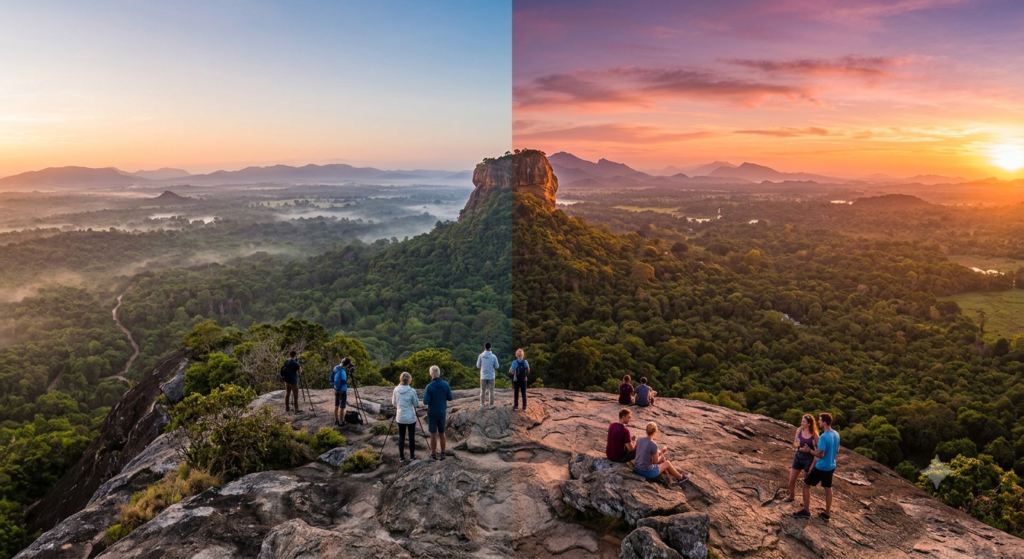
One of the biggest questions travelers ask is whether they should climb Pidurangula Rock for sunrise or sunset. The truth is that both experiences are exceptional, but each offers a completely different atmosphere. Sunrise attracts photographers and early risers eager to witness one of Sri Lanka’s most iconic landscapes awakening with the first light of day. The cooler temperatures make the climb more comfortable, and the peaceful surroundings create an almost spiritual experience as birds begin singing and mist slowly lifts from the forests below.
Sunset, on the other hand, offers warmer colors and dramatic shadows stretching across the countryside. The changing light transforms Sigiriya Rock into a glowing monument that stands proudly above the surrounding jungle. Many visitors enjoy sitting quietly on the summit as the sky shifts from blue to orange, pink, and eventually deep purple. The evening atmosphere is calm, making it an excellent time for couples and travelers looking to relax after a busy day of sightseeing.
Your choice ultimately depends on personal preference. Photographers seeking crisp visibility often prefer sunrise, while those looking for vibrant colors may lean toward sunset. Whichever option you choose, arriving early allows plenty of time to complete the hike safely and secure one of the best viewing spots at the summit.
Entrance Fee and Opening Hours
Before planning your hike, it’s useful to know the practical details about visiting Pidurangula Rock. The site is managed through the Pidurangula Royal Cave Temple (Rajamaha Viharaya), and visitors are required to purchase an entrance ticket at the temple before beginning the climb. Compared to Sigiriya Rock Fortress, Pidurangula offers excellent value for money, making it one of the best budget-friendly attractions in Sri Lanka.
| Information | Details |
|---|---|
| Opening Hours | Approximately 5:00 AM – 6:00 PM |
| Average Hiking Time | 30–45 minutes (one way) |
| Total Visit Duration | 2–3 hours |
| Difficulty Level | Moderate |
| Best Time | Sunrise or Sunset |
Since entrance fees can occasionally change, travelers are encouraged to confirm the latest pricing with their hotel, local guide, or the official ticket counter before visiting. Carrying small cash notes is recommended, as digital payment options may not always be available.
As the hike begins through an active Buddhist temple, visitors should dress respectfully by covering their shoulders and knees while walking through the temple grounds. Shoes must also be removed briefly before entering the temple area, so wearing footwear that’s easy to take off is helpful.
Complete Hiking Guide
The hike to the summit of Pidurangula Rock is considered moderately challenging, making it suitable for most travelers with average fitness levels. Unlike steep mountain treks that require technical climbing skills, this trail follows a combination of stone staircases, forest paths, and natural rock formations. Most visitors complete the ascent in around 30 to 45 minutes, though photography stops and rest breaks may extend the journey slightly.
The first half of the trail is relatively straightforward. Stone steps guide hikers through shaded woodland filled with birds, butterflies, and native vegetation. Along the way, visitors pass ancient cave temples, meditation sites, and the impressive reclining Buddha statue. These cultural landmarks provide excellent opportunities to pause, appreciate the history of the site, and capture memorable photographs.
The second half becomes increasingly adventurous as the path narrows between giant granite boulders. Here, hikers begin scrambling over rocks using both hands and feet. While this section requires extra care, it remains manageable for most adults. Proper hiking shoes with good grip significantly improve safety, especially after rain. Families traveling with young children should supervise them closely during this final section.
Reaching the summit feels incredibly rewarding. A wide granite platform opens before you, revealing uninterrupted panoramic views across central Sri Lanka. Looking toward Sigiriya Rock standing proudly above the jungle is a moment that many travelers remember for years. The peaceful surroundings make it easy to relax, enjoy the fresh air, and appreciate the remarkable beauty of Sri Lanka’s Cultural Triangle.
What to Wear and What to Bring
Packing wisely can make your visit to Pidurangula much more comfortable. Since the hike involves walking on uneven rocks and exposed surfaces, choosing suitable clothing and equipment is essential. Lightweight, breathable clothing works best because temperatures increase quickly after sunrise. Comfortable sportswear or hiking attire allows easy movement while climbing over rocks near the summit.
Footwear is perhaps the most important consideration. Hiking shoes or sturdy trainers with non-slip soles provide excellent grip on granite surfaces. Sandals and flip-flops are strongly discouraged because they offer little protection or stability during the final climb. Since visitors pass through the temple before starting the hike, wearing shoes that can easily be removed is convenient.
Other useful items include:
- Plenty of drinking water
- Sunscreen
- Sunglasses
- Hat or cap
- Small backpack
- Camera
- Power bank
- Insect repellent
Photographers visiting for sunrise should also carry a lightweight tripod if planning long-exposure shots. During the rainy season, packing a waterproof jacket and dry bag helps protect electronic equipment from sudden tropical showers.
Photography Tips
If you’re searching for one of the most photogenic locations in Sri Lanka, Pidurangula Rock will not disappoint. The summit provides one of the country’s most iconic landscapes, with Sigiriya Rock positioned perfectly against a backdrop of forests and distant mountains. The best photographs are typically captured shortly after sunrise, when soft golden light illuminates both the landscape and the famous rock fortress.
Wide-angle lenses are particularly effective because they capture the vast scenery surrounding the summit. Drone photography, where permitted under local regulations, can also produce spectacular aerial perspectives. Visitors should always respect any restrictions regarding drone use near historical or religious sites.
Composition plays a major role in creating memorable images. Including people in the foreground helps demonstrate the enormous scale of the surrounding landscape. Natural rock formations also make excellent leading lines that draw attention toward Sigiriya in the distance. Photographers willing to wait patiently often capture changing light conditions that transform the entire landscape within minutes.
Cloudy mornings can be equally rewarding. Mist rolling through the forests below creates dramatic scenes that are impossible to replicate on sunny days. Every visit offers unique lighting conditions, making Pidurangula a destination that many photographers happily return to multiple times.
Wildlife Around Pidurangula Rock
One of the hidden treasures of Pidurangula Rock is the incredible biodiversity that surrounds it. Located within Sri Lanka’s Cultural Triangle, the area is covered by dry evergreen forests that provide a natural habitat for a wide variety of wildlife. As you make your way up the hiking trail, you’ll likely hear the calls of colorful birds echoing through the trees while playful monkeys leap effortlessly between branches. Early morning visitors are often rewarded with sightings of peacocks displaying their magnificent feathers, giant squirrels darting through the canopy, and butterflies fluttering among the wildflowers.
The forests surrounding Pidurangula are also home to several species of reptiles, including harmless lizards that bask on the warm granite rocks. While wild elephants occasionally roam the broader region, they are rarely seen near the hiking trail during daylight hours. Nevertheless, travelers exploring nearby national parks such as Minneriya or Kaudulla may have an excellent opportunity to witness Sri Lanka’s famous elephant gatherings after completing their Pidurangula adventure.
Nature enthusiasts should remember that this landscape remains a protected environment. Avoid feeding wildlife, leave no litter behind, and stay on designated paths to help preserve this remarkable ecosystem. Respecting nature ensures future generations can continue enjoying one of Sri Lanka’s most beautiful hiking destinations.
Pidurangula Rock vs Sigiriya Rock
Many travelers wonder whether they should climb Pidurangula Rock, Sigiriya Rock, or both. The truth is that each offers a completely different experience. Sigiriya is internationally recognized as a UNESCO World Heritage Site famous for its ancient palace, frescoes, and remarkable engineering. Pidurangula, meanwhile, delivers a more adventurous climb, fewer crowds, and arguably the finest panoramic view of Sigiriya itself.
| Feature | Pidurangula Rock | Sigiriya Rock |
|---|---|---|
| Main Attraction | Scenic summit and hiking | Ancient royal fortress |
| View of Sigiriya | Excellent | Not available |
| Hiking Experience | Natural adventure | Historic staircases |
| Crowds | Moderate | Usually busy |
| Photography | Outstanding panoramic views | Historical architecture |
| Budget Friendly | Yes | Higher entrance fee |
| Time Required | 2–3 hours | 3–4 hours |
For visitors with enough time, climbing both attractions is highly recommended. Sigiriya offers a fascinating journey into Sri Lanka’s royal history, while Pidurangula provides the perfect opportunity to admire the fortress from a breathtaking natural viewpoint. Together, they create one of the most memorable travel experiences in the country.
Nearby Attractions
A visit to Pidurangula Rock can easily be combined with several other world-class attractions located nearby. Many travelers spend two or three days exploring this remarkable region, allowing enough time to appreciate its history, wildlife, and natural beauty.
Some of the best nearby attractions include:
- Sigiriya Lion Rock Fortress
- Dambulla Cave Temple
- Minneriya National Park
- Kaudulla National Park
- Hurulu Eco Park
- Ritigala Archaeological Reserve
- Habarana Village Tours
- Pidurangula Royal Cave Temple
Combining these destinations creates an unforgettable itinerary that showcases Sri Lanka’s cultural heritage alongside its extraordinary wildlife and landscapes.
Essential Travel Tips
A little preparation goes a long way toward making your Pidurangula experience enjoyable and stress-free. Begin your hike early in the morning to avoid the strongest midday heat and to experience the breathtaking sunrise over Sigiriya. Carry enough drinking water because there are no refreshment stalls once you begin climbing. Wear lightweight clothing and sturdy footwear with good grip, particularly if rain has fallen recently.
Respect the religious significance of the temple at the entrance by dressing modestly and removing your shoes where required. Keep your belongings secure, avoid leaving rubbish behind, and remain on marked paths for your safety. If you plan to photograph the sunrise, arrive at least 30 minutes before dawn to allow enough time to reach the summit comfortably.
Hiring an experienced local guide is also worthwhile for travelers interested in learning about the site’s fascinating history and Buddhist heritage. Guides can point out ancient caves, inscriptions, and historical details that many independent visitors would otherwise overlook.
Conclusion
Pidurangula Rock has earned its reputation as one of the very best places to visit in Sri Lanka. Combining spectacular scenery, fascinating history, ancient Buddhist heritage, and an exciting hiking adventure, it offers something for every type of traveler. Whether your goal is capturing the perfect sunrise photograph, exploring centuries-old temples, or simply enjoying peaceful moments surrounded by nature, Pidurangula delivers an unforgettable experience that exceeds expectations.
For visitors exploring Sri Lanka’s Cultural Triangle, climbing Pidurangula is an experience that should not be missed. Its breathtaking summit view of Sigiriya, affordable entrance fee, moderate hiking trail, and tranquil atmosphere make it one of the country’s finest travel destinations. Add it to your itinerary, start your hike before sunrise, and prepare to witness one of the most spectacular panoramas Sri Lanka has to offer.
Frequently Asked Questions (FAQs)
1. How difficult is the Pidurangula Rock hike?
The hike is considered moderately difficult. Most people with average fitness can complete the climb in about 30–45 minutes.
2. Is Pidurangula Rock better than Sigiriya?
Both offer unique experiences. Sigiriya is best for history and archaeology, while Pidurangula is famous for adventure and panoramic views of Sigiriya.
3. Can children climb Pidurangula Rock?
Yes. Older children with adult supervision can complete the hike, although the final rock scramble requires extra care.
4. What is the best time to visit Pidurangula Rock?
The best experience is during sunrise, when temperatures are cooler and the lighting is perfect for photography.
5. How long should I spend at Pidurangula Rock?
Allow 2–3 hours for the complete visit, including the hike, photography, and time to enjoy the spectacular views from the summit.