
Article Outline
- H1: Complete Guide to Sigiriya Lion Rock
- H2: What is Sigiriya Lion Rock?
- H3: Why Sigiriya is Famous Around the World
- H3: UNESCO World Heritage Recognition
- H2: The Fascinating History of Sigiriya
- H3: King Kashyapa and the Royal Fortress
- H3: From Palace to Buddhist Monastery
- H2: Top Attractions Inside Sigiriya
- H3: The Water Gardens
- H3: The Boulder Gardens
- H3: The Mirror Wall
- H3: The Sigiriya Frescoes
- H3: Lion’s Paw Terrace
- H3: Summit Palace Ruins
- H2: Visitor Information
- H3: Opening Hours & Ticket Prices
- H3: Best Time to Visit Sigiriya
- H3: How to Get There
- H2: Essential Travel Tips
- H3: What to Bring
- H3: Nearby Attractions
- H2: Conclusion
- H2: Frequently Asked Questions
- H2: What is Sigiriya Lion Rock?
Complete Guide to Sigiriya Lion Rock
What is Sigiriya Lion Rock?
Rising dramatically above the lush forests of central Sri Lanka, Sigiriya Lion Rock is one of the world’s most spectacular archaeological sites. Standing approximately 180–200 meters above the surrounding plains, this ancient rock fortress has become the country’s most recognized landmark and one of Asia’s greatest historical attractions. Designated as a UNESCO World Heritage Site, Sigiriya welcomes hundreds of thousands of visitors every year who come to admire its remarkable engineering, ancient frescoes, royal gardens, and breathtaking panoramic views.
Often called the “Eighth Wonder of the World,” Sigiriya is far more than a giant rock. It represents an extraordinary combination of architecture, landscape design, urban planning, hydraulic engineering, and artistic achievement dating back over 1,500 years. Built during the reign of King Kashyapa I (477–495 AD), the fortress was designed as a secure royal palace that blended seamlessly with nature while providing strategic protection from enemies. Today, visitors climb approximately 1,200 steps to reach the summit, passing through magnificent water gardens, ancient graffiti-covered walls, colorful frescoes, and the famous Lion Terrace before arriving at the ruins of the royal palace.
For travelers exploring Sri Lanka’s famous Cultural Triangle, Sigiriya is considered an absolute must-visit destination. Whether you’re passionate about history, photography, adventure, or simply unforgettable scenery, this incredible landmark offers an experience unlike anywhere else in the world.
Why Sigiriya is Famous Around the World
There are many reasons why Sigiriya Lion Rock consistently ranks among the top tourist attractions in Sri Lanka and remains one of South Asia’s most visited historical sites. Unlike many ancient ruins, Sigiriya combines several extraordinary features within a single destination. Visitors can experience beautifully landscaped water gardens, climb through massive granite boulders, admire centuries-old frescoes, walk alongside the polished Mirror Wall, stand beneath enormous lion paws carved into the rock, and finally reach a palace built on top of a towering monolith.
One of Sigiriya’s most fascinating characteristics is its advanced engineering. Archaeologists continue to admire its sophisticated hydraulic system, which supplied water throughout the palace complex and ornamental gardens. Some of the ancient fountains still function during the rainy season, showcasing the remarkable skills of Sri Lanka’s ancient engineers. This blend of architecture and nature has helped Sigiriya earn worldwide recognition among historians, architects, photographers, and travelers alike.
The panoramic views from the summit are another reason visitors consistently describe Sigiriya as the highlight of their Sri Lankan journey. On clear days, the surrounding forests, lakes, villages, and distant mountain ranges create an unforgettable landscape stretching in every direction.
The Fascinating History of Sigiriya
The story behind Sigiriya is as dramatic as the fortress itself. During the late 5th century AD, Prince Kashyapa seized the throne after overthrowing his father, King Dhatusena. Fearing retaliation from his brother Moggallana, the rightful heir, Kashyapa abandoned the ancient capital and established a heavily fortified palace atop the massive Sigiriya rock. The isolated granite monolith provided both natural protection and an ideal location for constructing one of the most ambitious royal residences in ancient Asia.
Under King Kashyapa’s rule, Sigiriya transformed into an architectural masterpiece. Skilled craftsmen built symmetrical gardens, elaborate water systems, defensive moats, impressive gateways, and luxurious royal residences. The entrance featured an enormous lion-shaped structure, giving rise to the name “Lion Rock.” While the lion’s body has disappeared over time, its gigantic paws remain one of the site’s most photographed attractions.
Following King Kashyapa’s defeat in 495 AD, Sigiriya gradually lost its role as a royal capital. Buddhist monks later converted the site into a monastery, preserving many of its structures for centuries. Modern archaeological excavations have revealed the extraordinary sophistication of the ancient city, confirming Sigiriya’s importance as one of the greatest surviving examples of early urban planning in South Asia.
Top Attractions Inside Sigiriya Lion Rock
A visit to Sigiriya Lion Rock is much more than climbing a staircase to a viewpoint. Every section of this ancient fortress reveals another chapter of Sri Lanka’s rich history and demonstrates the extraordinary vision of King Kashyapa’s architects. From beautifully landscaped gardens at the base to the magnificent palace ruins on the summit, each attraction has been carefully designed to impress visitors even after more than 1,500 years.
The journey begins with the royal gardens, considered among the oldest landscaped gardens in the world. As you continue upward, you’ll encounter giant boulders, secret pathways, colorful frescoes, the famous Mirror Wall, and finally the massive Lion Terrace that guards the entrance to the summit. Each stop offers incredible photography opportunities while telling the fascinating story of one of Asia’s greatest ancient civilizations.
Many travelers spend around 2.5 to 4 hours exploring the entire archaeological complex. Taking your time is highly recommended because every section contains hidden details that many visitors overlook when rushing to the top.
The Water Gardens
The Water Gardens are the first major attraction visitors encounter after entering the Sigiriya Archaeological Park. These gardens are widely regarded as one of the finest examples of ancient landscape architecture anywhere in Asia. Designed with remarkable precision, the gardens feature symmetrical ponds, fountains, islands, canals, and stone pathways that create a peaceful atmosphere long before visitors begin climbing the rock itself.
One of the most fascinating aspects of the Water Gardens is their sophisticated hydraulic engineering. Despite being built in the 5th century, many fountains still function naturally during the rainy season. Underground channels and reservoirs distribute water throughout the complex without the use of modern technology, demonstrating the remarkable knowledge possessed by ancient Sri Lankan engineers. This ingenious water management system continues to attract archaeologists and engineers from around the world.
The gardens also served practical purposes beyond their beauty. They helped cool the surrounding environment, supplied water to the royal palace, and created an impressive entrance worthy of a king’s residence. Today, visitors often pause here to admire the tranquil scenery, photograph the reflection of Sigiriya Rock in the ponds, and appreciate the peaceful surroundings before beginning the more physically demanding climb.
The Boulder Gardens
After leaving the Water Gardens, visitors enter the mysterious Boulder Gardens, where enormous granite rocks create a natural maze leading toward the summit. Ancient builders cleverly integrated these massive boulders into the fortress’s defensive system, transforming the landscape into a secure approach that would have made enemy attacks extremely difficult.
Walking through the Boulder Gardens feels like exploring an ancient hidden city. Narrow staircases wind between towering rocks, while stone platforms reveal evidence of meditation caves once used by Buddhist monks. Some boulders still display inscriptions and carvings that have survived for centuries. Others appear perfectly balanced, creating dramatic natural formations that attract photographers from around the world.
The combination of natural geology and human engineering is what makes this section particularly impressive. Rather than removing obstacles, the architects embraced the landscape, designing pathways and structures that blended seamlessly with nature. This environmentally conscious approach remains a remarkable example of sustainable architecture long before the concept became popular in modern times.
The Mirror Wall
Among Sigiriya’s most fascinating historical treasures is the famous Mirror Wall. Originally polished so perfectly that the king could see his own reflection while walking alongside it, this remarkable wall still retains traces of its ancient shine despite centuries of exposure to the elements.
The Mirror Wall has become especially valuable because of the thousands of inscriptions written by visitors between the 8th and 13th centuries. These ancient poems and personal messages offer rare insight into medieval Sri Lankan culture. Historians often describe them as one of the earliest known examples of public visitor reviews, with travelers expressing admiration for the fortress, its artwork, and its breathtaking surroundings.
Today, writing on the wall is strictly prohibited to preserve this irreplaceable historical record. As visitors carefully pass alongside it, they can still appreciate the craftsmanship that made such an extraordinary polished surface possible more than fifteen centuries ago.
The Sigiriya Frescoes
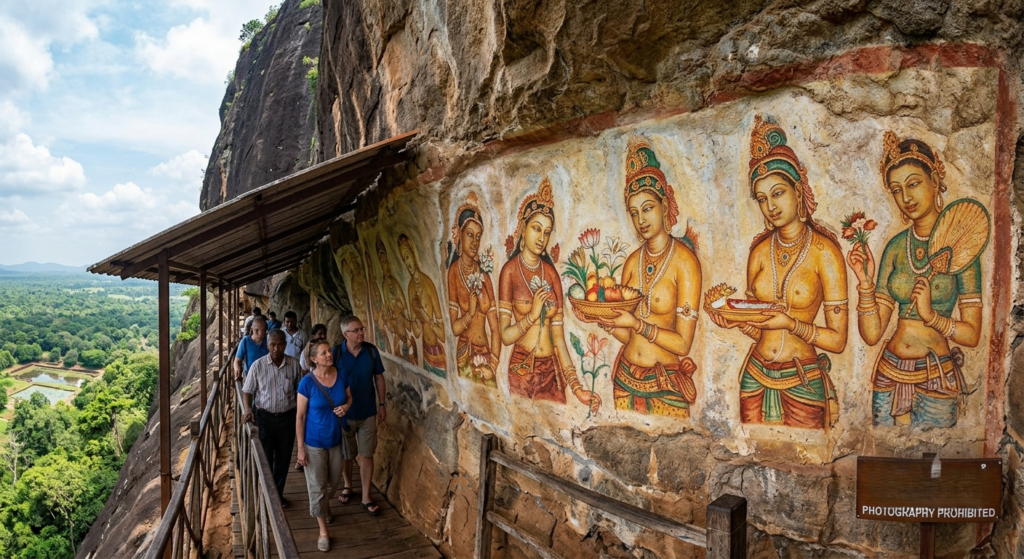
High above the ground, hidden within a sheltered rock face, visitors discover one of Sigiriya’s greatest artistic masterpieces—the world-famous Sigiriya Frescoes. These ancient paintings portray elegantly dressed women carrying flowers, fruits, and ceremonial offerings. Their graceful expressions, vibrant colors, and remarkable preservation continue to amaze visitors and art historians alike.
Originally, scholars believe hundreds of frescoes decorated the western face of the rock. Today, only a small number remain, but they provide an extraordinary glimpse into Sri Lanka’s artistic achievements during the 5th century. The paintings demonstrate advanced techniques in shading, proportion, and color blending that rival many classical works found elsewhere in the ancient world.
Photography is generally prohibited inside the fresco gallery to help preserve these delicate artworks. Visitors are encouraged to spend time observing the incredible details, appreciating how these paintings have survived centuries of changing weather and human history.
Lion’s Paw Terrace
Perhaps no image represents Sigiriya better than the enormous Lion’s Paw Terrace. Before reaching the summit, visitors climb a modern staircase that leads directly between two gigantic stone lion paws carved into the rock itself. These colossal sculptures are all that remain of what was once a magnificent lion-shaped gateway.
Historians believe the original structure featured a complete lion whose open mouth served as the entrance to the royal palace. Visitors would have climbed directly through the lion’s mouth before continuing to the summit. Although the upper portions of the sculpture have disappeared over time, the surviving paws remain among the most photographed landmarks in Sri Lanka.
Standing between these massive stone claws provides an unforgettable sense of scale. It also marks the beginning of the final climb to the summit, where breathtaking panoramic views reward every step taken.
Summit Palace Ruins
Reaching the summit of Sigiriya is an unforgettable experience. After climbing approximately 1,200 steps, visitors arrive at the ruins of King Kashyapa’s royal palace, built atop one of the most dramatic natural formations in Asia. Although much of the palace has disappeared over the centuries, the remaining foundations clearly reveal the sophisticated design of this ancient royal residence.
The summit includes the remains of audience halls, royal chambers, swimming pools, terraces, storage facilities, and defensive walls. Archaeologists continue to study these ruins to better understand how such an advanced city functioned more than 1,500 years ago. Every stone reflects the extraordinary ambition of the builders, who transformed an isolated granite monolith into one of the world’s most remarkable royal capitals.
The panoramic views from the top are simply spectacular. Visitors can see endless forests, peaceful lakes, small villages, and distant mountain ranges stretching across central Sri Lanka. Sunrise and early morning climbs offer especially beautiful lighting for photography, while clear afternoons provide excellent visibility across the Cultural Triangle. Many travelers describe standing on the summit as the highlight of their entire Sri Lankan holiday, making every step of the climb worthwhile.
Visitor Information
Opening Hours & Ticket Prices
Planning your visit to Sigiriya Lion Rock in advance will help you enjoy a smooth and memorable experience. The archaeological park is generally open daily from 5:30 AM to 6:00 PM, with the last admission usually around 5:00 PM. Arriving early is highly recommended, especially during the peak tourist season from December to April, as temperatures can rise quickly after 9:00 AM.
The entrance ticket grants access to the entire Sigiriya Archaeological Site, including the Water Gardens, Boulder Gardens, Mirror Wall, Frescoes, Lion Terrace, and the summit palace ruins. Ticket prices are subject to periodic revisions by the authorities, so visitors should always check the official website or consult their tour operator before traveling.
| Visitor Category | Approximate Ticket Price (USD) |
|---|---|
| Foreign Adult | $35 – $40 |
| Foreign Child | Discounted Rate |
| SAARC Nationals | Reduced Rate |
| Sri Lankan Citizens | Special Local Rate |
Although the entrance fee may appear higher than many other attractions in Sri Lanka, most visitors agree that the experience offers exceptional value. The combination of ancient history, UNESCO recognition, spectacular scenery, and world-class archaeology makes Sigiriya one of the country’s most rewarding travel experiences.
Many local tour operators also offer all-inclusive Sigiriya day tours, which include transportation, entrance arrangements, professional guides, bottled water, and visits to nearby attractions. These packages are particularly convenient for first-time visitors who want a hassle-free experience.
Best Time to Visit Sigiriya Lion Rock
Choosing the right time to visit can make a significant difference to your overall experience. Thanks to Sri Lanka’s tropical climate, Sigiriya can be visited throughout the year, but certain seasons provide more comfortable weather and clearer views.
The best months are generally:
- December to April – Dry weather, blue skies, excellent visibility.
- May to September – Warm weather with occasional afternoon showers.
- October to November – Lush green landscapes following seasonal rains.
The ideal time of day is between 6:00 AM and 8:00 AM. Early morning visitors enjoy cooler temperatures, fewer crowds, softer lighting for photography, and a much more comfortable climb. Watching the sunrise illuminate the surrounding forests creates a magical atmosphere that many photographers consider one of Sri Lanka’s finest landscapes.
Late afternoon is another good option if you prefer slightly cooler weather. However, avoid arriving too close to closing time, as you’ll need sufficient time to explore the entire archaeological complex.
How to Get to Sigiriya
One reason for Sigiriya’s popularity is its excellent location within Sri Lanka’s famous Cultural Triangle. The destination is well connected by road and can easily be included in most Sri Lanka itineraries.
From Colombo
The journey from Colombo takes approximately 4.5 to 5 hours by private vehicle via the expressway and national highways. Private transfers offer the most comfortable option, especially for families and groups.
From Kandy
Traveling from Kandy to Sigiriya usually takes around 2.5 hours. This route passes through beautiful countryside, small villages, and spice gardens, making it one of Sri Lanka’s most scenic drives.
From Dambulla
Dambulla is located only 20 kilometers from Sigiriya, making it an ideal base for visitors. Tuk-tuks, taxis, and private vehicles are readily available throughout the day.
From Ella
Visitors traveling from Ella should expect a journey of approximately 5 to 6 hours, depending on traffic and chosen transportation.
Transportation Options
Visitors can choose from:
- Private car with chauffeur
- Guided day tours
- Taxi services
- Public buses (budget-friendly)
- Tuk-tuks from nearby towns
- Self-drive rental vehicles
Many international travelers prefer booking a professional chauffeur guide, as it allows them to explore additional attractions along the way while learning about Sri Lanka’s fascinating history and culture.
Essential Travel Tips
What to Bring
Preparing properly will make your climb much more enjoyable. Although Sigiriya is suitable for most healthy visitors, the climb includes approximately 1,200 steps, so comfortable clothing is essential.
Recommended items include:
- Comfortable walking shoes
- Lightweight clothing
- Hat or cap
- Sunglasses
- Sunscreen
- Reusable water bottle
- Camera
- Small backpack
- Insect repellent
Avoid carrying heavy luggage, as the climb involves several narrow staircases and elevated walkways. Since monkeys are commonly seen around the site, it’s also advisable not to carry food openly.
Nearby Attractions
One of the biggest advantages of visiting Sigiriya is its proximity to several other world-famous attractions. Many travelers combine multiple destinations into a single day or two-day itinerary, creating an unforgettable cultural experience.
Pidurangala Rock
Located only a few minutes from Sigiriya, Pidurangala Rock offers arguably the best panoramic view of Sigiriya itself. The sunrise hike is becoming increasingly popular among photographers due to its spectacular scenery.
Dambulla Cave Temple
Just 20 minutes away lies the magnificent Dambulla Cave Temple, another UNESCO World Heritage Site featuring ancient Buddhist cave shrines, colorful murals, and over 150 Buddha statues.
Minneriya National Park
Wildlife lovers should not miss Minneriya National Park, famous for “The Gathering,” where hundreds of Asian elephants assemble around the reservoir during the dry season. It is considered one of the greatest wildlife spectacles in Asia.
Polonnaruwa Ancient City
History enthusiasts can continue their journey to Polonnaruwa, Sri Lanka’s medieval capital filled with impressive temples, royal palaces, stone carvings, and giant Buddha statues.
Village Tours
Visitors looking for authentic local experiences can enjoy traditional village tours featuring:
- Bullock cart rides
- Canoe trips
- Traditional Sri Lankan cooking demonstrations
- Local farming experiences
- Authentic village lunches
These activities provide a wonderful opportunity to experience Sri Lanka’s warm hospitality beyond its famous historical landmarks.
Conclusion
Sigiriya Lion Rock is much more than a famous tourist attraction—it is a journey through Sri Lanka’s extraordinary history, culture, and architectural brilliance. Rising majestically above the lush forests of the Cultural Triangle, this UNESCO World Heritage Site continues to inspire millions of travelers with its remarkable blend of natural beauty and ancient engineering. Every step of the climb tells a story, from the elegant Water Gardens and mysterious Boulder Gardens to the colorful Sigiriya Frescoes, the legendary Lion’s Paw Terrace, and the breathtaking palace ruins that crown the summit.
Whether you are a history enthusiast, nature lover, photographer, or adventure seeker, Sigiriya offers an experience unlike any other destination in Sri Lanka. The panoramic views from the top reward every effort, while the surrounding attractions—including Pidurangala Rock, Dambulla Cave Temple, Minneriya National Park, and Polonnaruwa—make the region perfect for a multi-day exploration. Travelers who take the time to discover Sigiriya often describe it as the highlight of their Sri Lankan adventure and one of the most unforgettable archaeological sites in Asia.
If you’re planning your next holiday in Sri Lanka, make Sigiriya Lion Rock the centerpiece of your itinerary. Arrive early, wear comfortable shoes, bring your camera, and prepare to be amazed by one of the world’s greatest ancient masterpieces. Whether you visit independently or with a knowledgeable local guide, Sigiriya promises memories that will last a lifetime.
Frequently Asked Questions (FAQs)
1. How long does it take to climb Sigiriya Lion Rock?
Most visitors complete the climb and explore the archaeological site in 2.5 to 4 hours. If you enjoy photography or wish to explore every section in detail, allow up to half a day.
2. Is Sigiriya Lion Rock difficult to climb?
The climb is considered moderately challenging because it involves around 1,200 steps. Most people with a reasonable level of fitness can complete it comfortably by taking regular breaks.
3. What is the best time of day to visit Sigiriya?
The best time is early in the morning between 6:00 AM and 8:00 AM. Cooler temperatures, fewer crowds, and beautiful morning light make the experience much more enjoyable.
4. Can children and senior travelers visit Sigiriya?
Yes. Many families and senior travelers successfully climb Sigiriya every day. Visitors should climb at their own pace, stay hydrated, and use the handrails where available.
5. Is hiring a guide worth it?
Absolutely. A professional local guide can explain the fascinating history, architecture, legends, and hidden details of Sigiriya, making your visit far more meaningful than exploring independently.