
Article Outline
- H1: Temple of the Sacred Tooth Relic, Kandy Sri Lanka
- H2: Introduction to Sri Dalada Maligawa
- H3: Why the Temple is Famous Worldwide
- H3: Importance to Sri Lankan Culture and Buddhism
- H2: History of the Temple of the Sacred Tooth Relic
- H3: The Arrival of the Sacred Tooth Relic in Sri Lanka
- H3: Kandyan Kings and the Temple’s Royal Legacy
- H2: UNESCO World Heritage Status
- H3: Why UNESCO Recognized Kandy
- H2: Architecture of Sri Dalada Maligawa
- H3: Kandyan Architectural Style
- H4: The Golden Roof and Sacred Chambers
- H2: Religious Importance of the Temple
- H3: Buddhist Rituals and Daily Worship
- H3: Sacred Tooth Relic and Spiritual Beliefs
- H2: Esala Perahera Festival in Kandy
- H3: Traditional Dancers and Decorated Elephants
- H3: Why Tourists Love the Festival
- H2: Best Time to Visit Temple of the Tooth
- H3: Weather and Tourist Seasons
- H3: Temple Opening Hours and Puja Times
- H2: Travel Guide to Temple of the Sacred Tooth Relic
- H3: How to Reach Kandy from Colombo
- H3: Entrance Fees, Dress Code, and Visitor Tips
- H2: Nearby Attractions in Kandy
- H3: Kandy Lake and Royal Palace
- H2: Conclusion
- H2: FAQs About Temple of the Sacred Tooth Relic
- H2: Introduction to Sri Dalada Maligawa
Temple of the Sacred Tooth Relic, Kandy Sri Lanka – The Sacred Heart of Buddhism and Sri Lankan Heritage
Introduction to Sri Dalada Maligawa
Nestled in the misty hills of Kandy, the Temple of the Sacred Tooth Relic, also known as Sri Dalada Maligawa, stands as one of the most sacred Buddhist temples in the world. For centuries, this magnificent temple has attracted pilgrims, historians, photographers, spiritual seekers, and travelers from every corner of the globe. The temple houses what Buddhists believe to be the left canine tooth relic of Lord Buddha, making it the spiritual heartbeat of Sri Lanka. Walking through the temple grounds feels like stepping into a living museum where religion, culture, architecture, and history blend together like colors in a Kandyan painting.
Kandy itself is often called the cultural capital of Sri Lanka, but the Temple of the Tooth Relic is the soul of the city. Every day, thousands of devotees dressed in white arrive carrying lotus flowers and incense sticks as offerings. The rhythmic sound of traditional Kandyan drums echoes through the halls during prayer ceremonies, creating an atmosphere that feels both powerful and peaceful. The temple is not simply a tourist attraction; it is a living spiritual center deeply connected to Sri Lankan identity. According to recent visitor reports and temple tourism updates, the site continues to receive massive crowds, especially during special relic exhibitions and religious festivals.
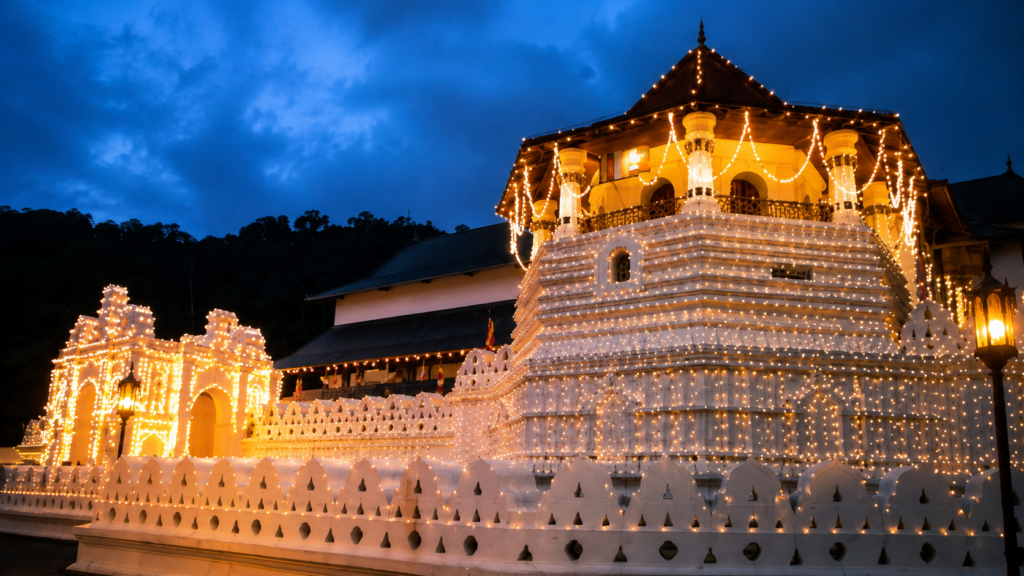
Why the Temple is Famous Worldwide
The fame of the Temple of the Sacred Tooth Relic goes far beyond Sri Lanka. Buddhists across Asia consider it one of the holiest places in the Buddhist world. The sacred relic symbolizes not only religious devotion but also royal authority. Ancient Sri Lankan kings believed that whoever protected the tooth relic had the divine right to rule the country. That belief transformed the relic into both a spiritual treasure and a political symbol for centuries.
International travelers are drawn to the temple because it offers something deeper than ordinary sightseeing. It is a place where ancient traditions still breathe. Visitors can witness authentic Buddhist rituals, admire royal Kandyan architecture, and experience a spiritual environment unlike anywhere else in South Asia. Travel guides published in 2025 continue to rank the temple among the top must-visit attractions in Sri Lanka because of its cultural significance and breathtaking setting near Kandy Lake.
Importance to Sri Lankan Culture and Buddhism
For Sri Lankans, the Temple of the Tooth Relic is much more than a historical monument. It represents the island’s Buddhist heritage, national pride, and centuries-old traditions. Major religious ceremonies, national blessings, and sacred processions revolve around this temple. Many locals visit the temple regularly to seek blessings before important life events such as exams, marriages, or business ventures.
The temple also preserves ancient art forms, music traditions, and ceremonial customs that continue to thrive today. From temple drummers to traditional dancers during the Esala Perahera, every ritual reflects Sri Lanka’s rich cultural identity. UNESCO recognized the Sacred City of Kandy as a World Heritage Site in 1988 because of the temple’s immense cultural and historical value.
History of the Temple of the Sacred Tooth Relic
The story behind the Temple of the Tooth Relic reads almost like an epic adventure novel. According to Buddhist chronicles, after the cremation of Lord Buddha in India, one sacred tooth relic was preserved. In the 4th century CE, Princess Hemamali and Prince Dantha secretly carried the relic to Sri Lanka, hiding it in the princess’s hair to protect it from enemies. This daring journey transformed Sri Lankan history forever because the relic eventually became the symbol of sovereignty for Sinhalese kings.
As different kingdoms rose and fell across Sri Lanka, the relic traveled with the rulers. It moved from Anuradhapura to Polonnaruwa and later through several royal capitals before finally arriving in Kandy. By the late 16th century, Kandy became the final royal stronghold against colonial powers, and the relic was enshrined there permanently. King Vimaladharmasuriya I built the first temple structure specifically to protect the sacred relic. Successive Kandyan kings expanded and beautified the temple, adding intricate carvings, decorative halls, and ceremonial chambers.
The Arrival of the Sacred Tooth Relic in Sri Lanka
The arrival of the sacred relic in Sri Lanka is one of the most treasured legends in Buddhist history. Ancient texts describe how the relic crossed the ocean during a time of political turmoil in India. The story symbolizes faith overcoming danger and preservation of Buddhism during uncertain times. This dramatic journey still inspires pilgrims today because it represents devotion, courage, and spiritual protection.
The relic’s presence transformed Sri Lanka into a major center of Theravada Buddhism. Kings built elaborate palaces and temples around it, while monks established sacred traditions connected to relic worship. Even now, the relic is rarely displayed publicly, which increases its mystery and spiritual significance. Special public exhibitions of the relic attract hundreds of thousands of devotees, as seen during the massive 2025 exposition in Kandy.
Kandyan Kings and the Temple’s Royal Legacy
The Kandyan Kingdom protected Sri Lankan independence for centuries while European colonial powers controlled coastal regions. During this period, the Temple of the Tooth became closely tied to royal authority. Kings considered themselves guardians of Buddhism and protectors of the relic. The temple complex was connected directly to the royal palace, showing the inseparable link between religion and governance.
Architectural additions such as the famous octagonal pavilion, known as the Patthirippuwa, reflected royal grandeur and Kandyan artistic excellence. Even after the British captured Kandy in 1815, the temple remained a powerful symbol of Sri Lankan identity. Unlike many colonial conquests where sacred artifacts were removed, the relic stayed in Sri Lanka, preserving its spiritual continuity.
UNESCO World Heritage Status
The Temple of the Sacred Tooth Relic forms the centerpiece of the Sacred City of Kandy, which UNESCO declared a World Heritage Site in 1988. UNESCO recognized Kandy because of its extraordinary cultural traditions, religious importance, and preservation of Sri Lankan civilization. The city represents the final kingdom of Sinhala rulers before British colonization, making it historically priceless.
UNESCO also acknowledged the temple as a living heritage site rather than a frozen monument. Religious ceremonies still take place daily, monks continue ancient rituals, and devotees maintain centuries-old customs. This living connection between past and present makes the temple unique compared to many historical sites around the world. Walking through Kandy feels like entering a timeline where ancient spirituality still shapes modern life.
Why UNESCO Recognized Kandy
UNESCO highlighted the city’s importance because it protected Sinhalese culture for more than 2,500 years. The Temple of the Tooth Relic was central to this identity. Its sacred role, artistic beauty, and political symbolism made it one of Asia’s most significant religious monuments.
The temple’s influence extends beyond religion. It shaped Sri Lankan literature, dance, architecture, music, and royal traditions. Even modern tourism campaigns present the temple as the face of Sri Lankan cultural tourism. Visitors exploring Kandy quickly realize that the city’s rhythm revolves around the sacred temple and its spiritual atmosphere.
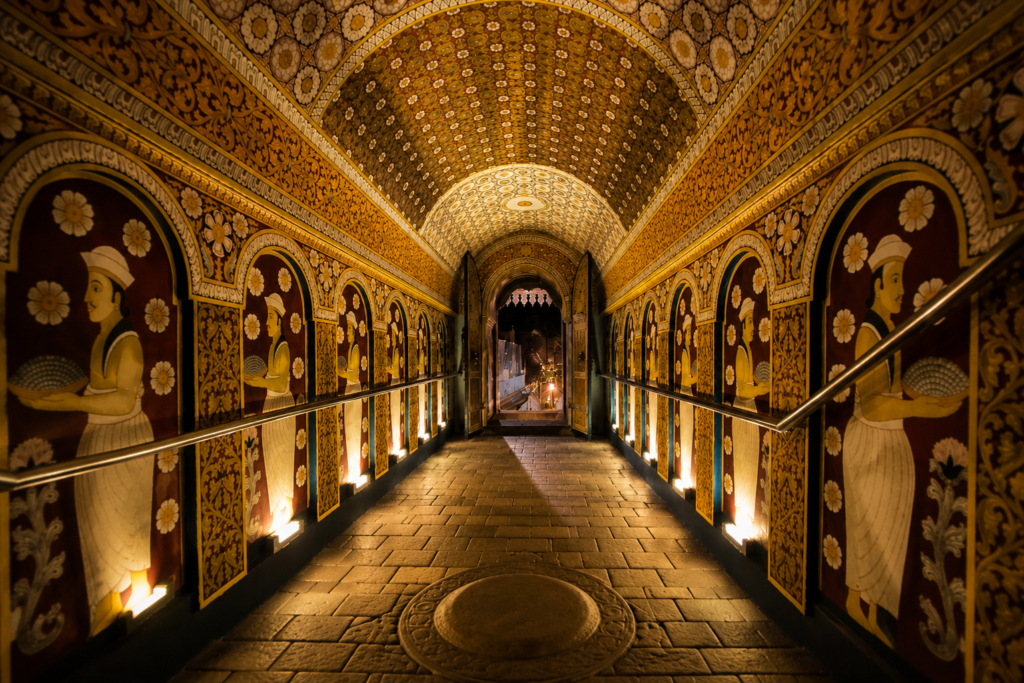
Architecture of Sri Dalada Maligawa
The architecture of the Temple of the Sacred Tooth Relic is nothing short of breathtaking. Built using traditional Kandyan design principles, the temple combines elegance with spiritual symbolism. White walls, golden roofs, wooden pillars, moonstones, and carved doorways create a visual masterpiece that captures the essence of Sri Lankan craftsmanship.
The temple complex includes shrines, museums, audience halls, libraries, courtyards, and meditation spaces. Every detail tells a story. Intricate carvings depict Buddhist teachings, floral patterns symbolize purity, and traditional paintings illustrate scenes from Sri Lankan history. At night, the illuminated golden roof reflects beautifully against Kandy Lake, creating one of the most photographed scenes in Sri Lanka.
Kandyan Architectural Style
Kandyan architecture is famous for blending functionality with artistic beauty. Unlike massive stone temples found elsewhere in Asia, Kandyan structures emphasize woodwork, symmetry, and harmony with nature. The Temple of the Tooth demonstrates this style perfectly through its sloping roofs, detailed wooden ceilings, and open-air design.
The use of local materials and climate-sensitive construction methods also highlights the intelligence of ancient Sri Lankan builders. Wide roof extensions protect visitors from monsoon rains, while open courtyards improve airflow in the humid hill-country climate. These design elements continue to impress architects and historians studying traditional South Asian architecture.
The Golden Roof and Sacred Chambers
One of the temple’s most iconic features is the golden roof that covers the inner shrine. The roof glows brilliantly under sunlight, symbolizing purity and enlightenment. Inside the temple lies the sacred chamber where the relic is kept within a series of golden caskets shaped like stupas.
Visitors cannot directly see the tooth relic itself because it remains protected inside these sacred containers. However, the spiritual energy surrounding the shrine creates an unforgettable experience. During puja ceremonies, worshippers gather with flowers and prayers while traditional drummers perform sacred rhythms that echo through the halls.
Religious Importance of the Temple
Religion is the heartbeat of the Temple of the Sacred Tooth Relic. Every ritual, offering, and prayer reflects deep Buddhist traditions that have survived for centuries. The temple hosts three daily puja ceremonies that attract thousands of worshippers. These ceremonies are not staged performances for tourists; they are genuine acts of devotion that continue uninterrupted generation after generation.
The atmosphere during puja is deeply emotional. Drums thunder like rolling clouds, conch shells blow through the corridors, and the scent of lotus flowers fills the air. Devotees believe that offering flowers at the temple brings blessings, peace, and spiritual merit. Many visitors describe the experience as calming yet powerful, like standing inside a river of faith flowing through time.
Buddhist Rituals and Daily Worship
Daily worship at the temple follows ancient traditions preserved by Buddhist monks. Morning, noon, and evening pujas are accompanied by ceremonial drumming and offerings. Pilgrims often bring white lotus flowers because they symbolize purity and enlightenment in Buddhism.
Monks chant sacred verses while worshippers bow respectfully before the shrine. Photography restrictions near sacred areas encourage visitors to focus on the spiritual experience rather than treating the temple like a social media backdrop. This sense of reverence helps preserve the temple’s sacred atmosphere despite growing tourism.
Sacred Tooth Relic and Spiritual Beliefs
The sacred tooth relic represents the living presence of Lord Buddha according to Buddhist belief. Devotees see it as a source of protection, wisdom, and spiritual energy. For centuries, Sri Lankans believed the relic safeguarded the nation itself.
Special relic exhibitions are extremely rare and attract enormous crowds. In 2025, more than 150,000 devotees reportedly gathered in a single day during a public exposition event after a 16-year gap. This overwhelming devotion demonstrates how deeply connected the relic remains to Sri Lankan society even in the modern digital age.
Esala Perahera Festival in Kandy
The Kandy Esala Perahera is one of Asia’s most spectacular religious festivals. Held annually in July or August, this grand procession honors the sacred tooth relic through music, dance, lights, fire performances, and decorated elephants. Streets around the temple transform into rivers of color and sound as thousands gather to witness the celebration.
The festival dates back centuries and remains one of Sri Lanka’s proudest cultural traditions. Dancers spin like flames, drummers create thunderous rhythms, and beautifully dressed elephants carry ceremonial caskets through Kandy’s streets. Watching the procession feels like stepping into a royal pageant from another era.
Traditional Dancers and Decorated Elephants
Traditional Kandyan dancers are among the festival’s biggest highlights. Wearing elaborate costumes with silver ornaments and headdresses, performers leap and twirl to hypnotic drumbeats. Fire dancers add dramatic excitement by spinning flaming torches against the night sky.
Decorated elephants symbolize strength, dignity, and sacred tradition. The chief tusker carries a replica casket representing the sacred relic, making it the centerpiece of the procession. For many travelers, witnessing the Esala Perahera becomes the defining memory of their Sri Lankan journey.
Why Tourists Love the Festival
Tourists love the Esala Perahera because it delivers an authentic cultural experience impossible to replicate elsewhere. Unlike commercial festivals designed purely for entertainment, this event remains deeply spiritual and community-centered.
Hotels in Kandy often book out months in advance during the festival season because international travelers flock to witness the spectacle. Travel experts consistently rank the Perahera among the world’s greatest cultural festivals due to its scale, history, and emotional atmosphere.
Best Time to Visit Temple of the Tooth
The best time to visit the Temple of the Sacred Tooth Relic depends on what kind of experience you want. January to March generally offers pleasant weather with lower rainfall, making sightseeing more comfortable. July and August are perfect for visitors hoping to witness the Esala Perahera festival.
Early mornings provide a calmer atmosphere, while evening pujas offer dramatic lighting and stronger ceremonial energy. Full moon Poya days attract especially large crowds because of their religious significance. Travelers looking for a quieter experience may prefer weekdays outside festival seasons.
Weather and Tourist Seasons
Kandy’s hill-country climate is cooler than Colombo and Sri Lanka’s coastal areas. Misty mornings, occasional rain showers, and green mountain scenery create a refreshing atmosphere year-round. Peak tourist seasons usually align with the Esala Perahera and December holiday travel.
The temple becomes extremely crowded during major religious events. Visitors attending during these periods should prepare for long queues and heightened security measures. Comfortable walking shoes and modest clothing are highly recommended.
Temple Opening Hours and Puja Times
The temple generally opens from early morning until evening, with puja ceremonies held three times daily around 5:30 AM, 9:30 AM, and 6:30 PM. These ceremonies are considered the best times to experience the temple’s spiritual atmosphere.
Here is a quick visitor information table:
| Information | Details |
|---|---|
| Location | Kandy, Central Province, Sri Lanka |
| Famous For | Sacred Tooth Relic of Lord Buddha |
| UNESCO Status | Since 1988 |
| Best Time to Visit | January–March, July–August |
| Major Festival | Kandy Esala Perahera |
| Dress Code | Modest white clothing preferred |
| Puja Times | Morning, Noon, Evening |
| Photography | Restricted in sacred areas |
Travel Guide to Temple of the Sacred Tooth Relic
Traveling to Kandy is relatively easy because it is well connected to Colombo and other major Sri Lankan cities. Scenic train journeys through lush mountains are especially popular among tourists. The journey itself feels magical as tea plantations, waterfalls, and misty forests unfold outside the window.
Kandy also offers excellent accommodation options ranging from luxury hotels overlooking the lake to affordable guesthouses near the temple. Many travelers combine their temple visit with trips to Ella, Nuwara Eliya, Sigiriya, and Dambulla to create a complete Sri Lankan cultural itinerary.
How to Reach Kandy from Colombo
Visitors can travel from Colombo to Kandy by train, bus, private taxi, or rental car. The train ride is particularly famous because of its breathtaking scenery. Depending on traffic and transport choice, the journey usually takes three to four hours.
Tuk-tuks are widely available within Kandy city for short-distance travel. Since the temple sits near Kandy Lake and the city center, it is easy to access from most hotels and transport stations.
Entrance Fees, Dress Code, and Visitor Tips
Foreign visitors usually pay an entrance fee while local devotees often enter free during normal worship hours. Visitors must remove shoes before entering sacred areas, and modest clothing covering shoulders and knees is mandatory. White clothing is considered respectful and spiritually appropriate.
Helpful visitor tips include:
- Visit during puja for the best experience
- Carry socks because temple floors can become hot
- Avoid loud conversations inside sacred areas
- Bring flowers instead of flashy accessories
- Respect photography restrictions
Nearby Attractions in Kandy
Kandy offers much more than the Temple of the Tooth Relic. The city is filled with cultural landmarks, scenic viewpoints, botanical gardens, and colonial-era buildings. Many travelers spend at least two or three days exploring the surrounding attractions.
Kandy Lake and Royal Palace
Kandy Lake sits directly beside the temple and adds incredible beauty to the area. Early morning walks around the lake are peaceful and refreshing. The reflection of the temple against the water creates postcard-perfect scenery loved by photographers.
The nearby Royal Palace complex provides deeper insight into the lives of Kandyan kings. Museums inside the palace display royal artifacts, ancient manuscripts, ceremonial weapons, and historical exhibits connected to Sri Lanka’s final kingdom.
Conclusion
The Temple of the Sacred Tooth Relic in Kandy Sri Lanka is far more than a historical attraction. It is a living symbol of faith, culture, resilience, and national identity. Every corridor, drumbeat, flower offering, and prayer carries centuries of devotion woven into Sri Lanka’s story. Whether you visit as a Buddhist pilgrim, a history lover, a photographer, or an adventurous traveler, the temple leaves a lasting impression on the heart.
In a world racing toward modernization, Sri Dalada Maligawa stands like a sacred flame that refuses to fade. It preserves ancient traditions while welcoming millions of visitors each year with dignity and spiritual warmth. From the golden-roofed shrine to the dazzling Esala Perahera festival, the Temple of the Tooth remains one of the greatest cultural treasures in Asia and a must-visit destination in Sri Lanka.
FAQs About Temple of the Sacred Tooth Relic
1. Why is the Temple of the Sacred Tooth Relic important?
The temple houses the sacred tooth relic of Lord Buddha, making it one of the holiest Buddhist sites in the world and a symbol of Sri Lankan heritage.
2. Where is the Temple of the Tooth located?
The temple is located in Kandy, Central Province, Sri Lanka, beside the famous Kandy Lake.
3. What is the best time to visit the Temple of the Tooth?
January to March offers pleasant weather, while July and August are ideal for experiencing the Esala Perahera festival.
4. What should visitors wear to the temple?
Visitors should wear modest clothing covering shoulders and knees. White clothing is preferred for respectful worship.
5. Is photography allowed inside the temple?
Photography is allowed in some areas, but restrictions apply near sacred chambers and during religious ceremonies.